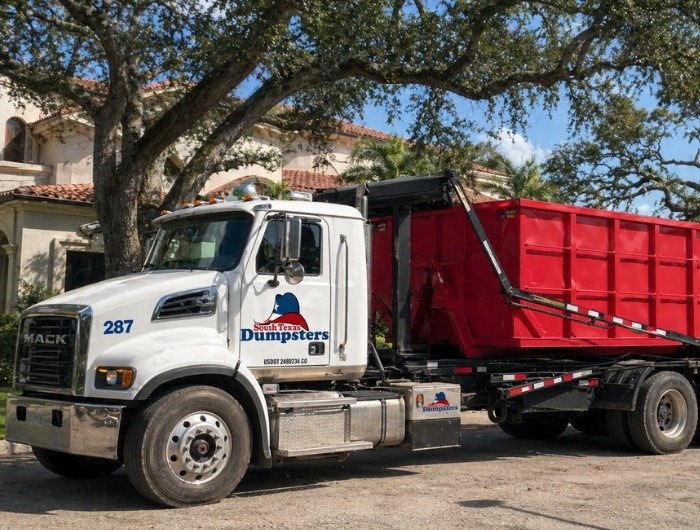
Picking the right size dumpster for a renovation comes down to three things: project scope, debris type, and debris weight. Most renovations across San Antonio, Austin, and surrounding South and Central Texas land on a 20, 30, or 40 yard roll-off dumpster. The trick is matching the container to the actual debris stream, not the square footage of the space.
A full kitchen tear-out and a single-bath remodel both qualify as renovations, but they generate very different volumes of debris.
Why renovation sizing is different from other project types
Renovations are harder to size for than roofing, land clearing, or new construction. Roofing mostly fills a container with one material at a known density. Land clearing handles bulky organic debris.
New construction generates a predictable phase-by-phase debris stream. Renovation is the opposite. You are tearing out drywall, framing scraps, cabinets, flooring, plumbing fixtures, tile, mortar, sometimes a slab section or chimney brick, each behaving differently inside a container.
The other factor that hits commercial renovations in San Antonio and Austin is the job site itself. Existing structures, narrow alley access, parking-deck-only tenant spaces, and downtown loading zones with restricted hours all constrain where a roll-off can sit. Sizing sometimes has to flex around delivery clearance as much as around debris volume.
The three active South Texas Dumpsters roll-off sizes are 20, 30, and 40 yard. Full dimensions and capacities are on our dumpster sizes hub page.
The harder question is which one fits your specific renovation, and that comes down to project scope, debris type, and weight density.
Single-bathroom remodels, small office turns, partial kitchen tear-outs, and single-room residential renovations usually fit a 20 yard. Lower volume is the obvious driver, but the 20 yard also handles weight-heavy work like tile bathroom tear-outs well, since a larger container can hit the 10-ton cap before it visually looks full.
Full kitchen and bath remodels, multi-room residential renovations, mid-size tenant improvements, and retail turnovers usually fit a 30 yard. This is the most common renovation pick across the South Texas Dumpsters service area. The mix of bulky debris (cabinets, framing, drywall) and moderate weight hits the volume-to-weight balance well.
Whole-floor commercial buildouts, full gut renovations, multi-unit remodels, and large hospitality or retail rebuilds usually fit a 40 yard. The exception is weight-heavy demo: when tile, concrete, or masonry dominate the debris stream, two 30 yards swapped out often makes more sense than one 40 yard, since the legal weight cap applies regardless of container size.
For broader context on the construction line, our construction dumpsters page walks through typical project scopes.

Volume is only half of the sizing equation. The other half is weight. The maximum legal payload inside any roll-off container on Texas roads is 10 tons, regardless of container size. This is governed by Texas Transportation Code §621.101, which sets gross and axle weight limits for trucks operating on state highways.
The 10-ton cap matters most when renovation debris includes heavy materials. Concrete, brick, ceramic tile, mortar, stone tile, and cast iron plumbing all weigh significantly more per cubic foot than drywall or wood framing. A 40 yard loaded with tile and mortar can hit the weight limit long before it looks full. The same 40 yard loaded with framing scraps and drywall will run out of room well before it runs out of weight.
This drives the 30 vs 40 yard dumpster decision on most renovation projects. For lighter mixed debris (drywall, framing, cabinets, fixtures), a 40 yard usually carries the most material per haul. For weight-heavy demo (tile bathrooms, concrete floor sections, masonry tear-out), two 20 or 30 yard containers swapped out is often a better fit than one 40 yard capped at the same 10-ton load.
Where the dumpster sits determines whether a city permit is needed. On private property (a commercial parking lot, a driveway, a fenced job site), no city permit is typically required. On public right-of-way (street, sidewalk, alley, public easement), a permit from the city is required, and the responsibility for pulling it usually falls on the customer or general contractor.
In Austin, the City of Austin Right-of-Way Management Division handles ROW permits. In San Antonio, placement runs through Public Works. Processing times vary, so factor permit lead time into the project schedule.
Separately, the carrier side has its own permit. To haul commercial solid waste within San Antonio city limits, a hauler must hold a Commercial Solid Waste Hauler Vehicle Permit issued under Chapter 14 of the San Antonio Municipal Code. South Texas Dumpsters operates under this permit, which is what allows our trucks to legally service a Bexar County job site.

Most renovations do not require specialty licensing on the hauler side, but credentials still matter. They are the signal that debris can legally move off the site to a proper disposal facility, which is the part that exposes the property owner if something goes wrong downstream. The EPA-certified waste hauling in South Texas post covers why this matters in depth.
South Texas Dumpsters serves San Antonio, Austin, and surrounding communities including Boerne, Kerrville, New Braunfels, San Marcos, and the Hill Country. We operate under EPA ID TXR000083663, the City of San Antonio Commercial Solid Waste Hauler Permit, and Railroad Commission of Texas registration RN109046839. The full credential list is on the permits page. For a project quote, call (210) 372-8666.
Most full-house residential renovations fit in a 30 yard roll-off. Multi-story projects with significant tear-out, or commercial renovations of similar scope, often move up to a 40 yard. Weight-heavy demolition with concrete or tile may run better as two 20 or 30 yard containers swapped out, since the legal weight cap limits how much heavy material a single larger container can carry.
It depends on the debris mix. For lighter mixed debris (drywall, framing, cabinets, fixtures), a 40 yard generally holds more per haul. For weight-heavy debris (tile, mortar, concrete, masonry), a 30 yard or paired 30 yards usually fits better, since the 10-ton legal load becomes the limiting factor, not container volume.
The maximum legal load weight is 10 tons across all roll-off sizes, set by Texas Transportation Code §621.101. A container can physically hold more, but anything over 10 tons cannot legally move on Texas roads.
Yes. Swap-out service is available across the South Texas Dumpsters coverage area. For longer renovations or phased demolition work, multiple deliveries or container swaps are usually more efficient than committing to a single oversize container that sits partially full for long stretches.
Hazardous materials are not accepted. That includes paint, oils, solvents, chemicals, batteries, car fluids, tires, propane tanks, asbestos, undischarged refrigerants, medical waste, and liquid waste of any kind. Standard renovation debris (drywall, framing, flooring, fixtures, cabinets, non-hazardous building materials, concrete, brick, tile, metal, lumber) is accepted.
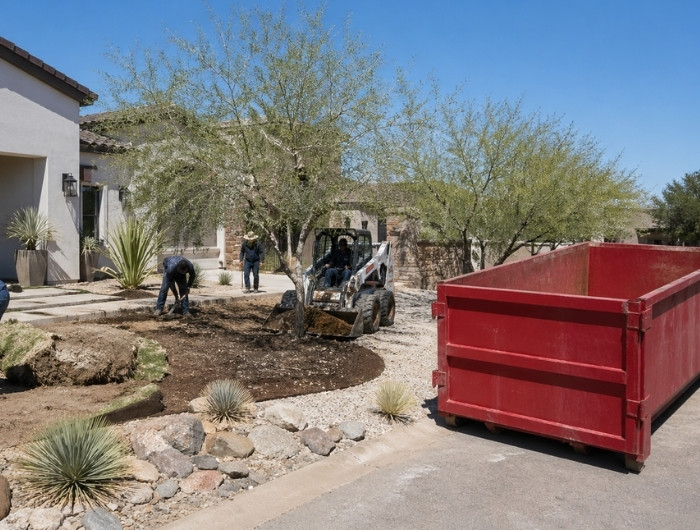
Sizing a roll-off for a renovation comes down to scope, debris mix, and weight. The fastest way to land on the right container is to talk through the project with someone who knows the local debris streams. Call (210) 372-8666 to discuss your location, timeline, and debris type, or use the contact form for a custom quote. If you are still working out logistics, How to rent a dumpster in San Antonio covers the booking process and How much does it cost to rent a dumpster covers pricing factors.