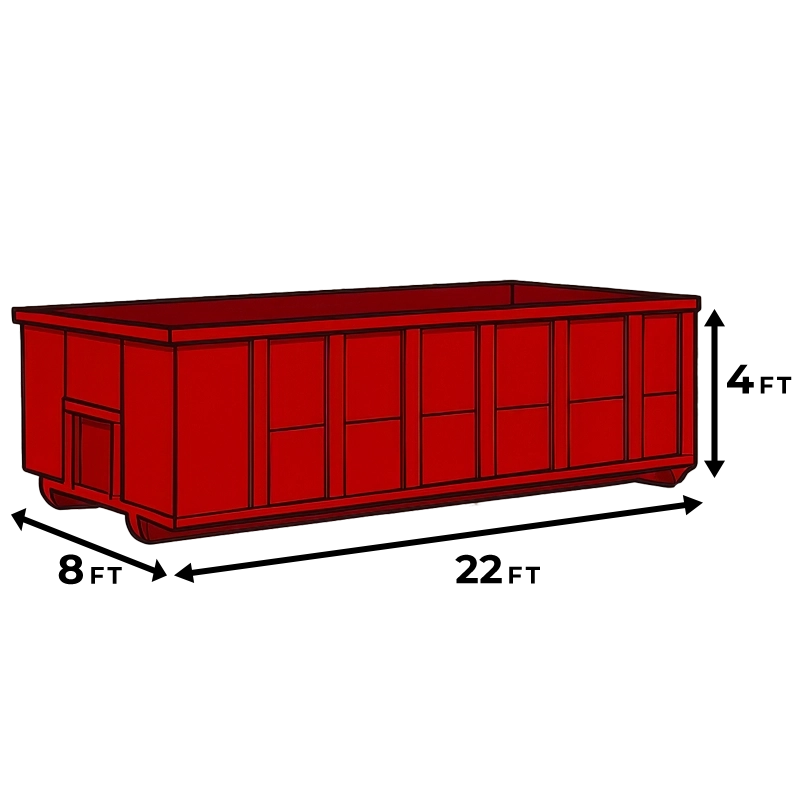
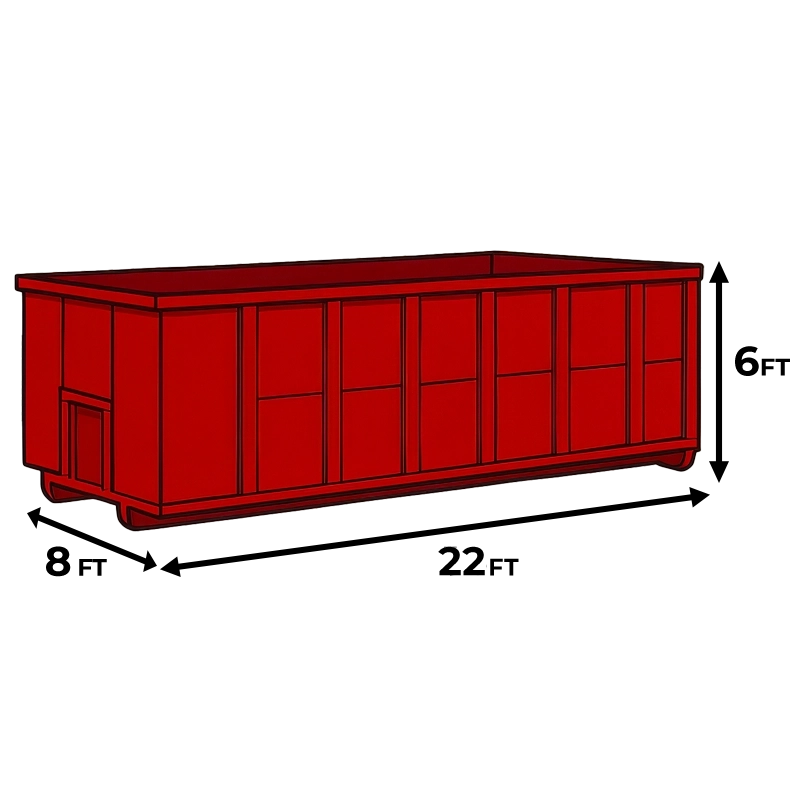
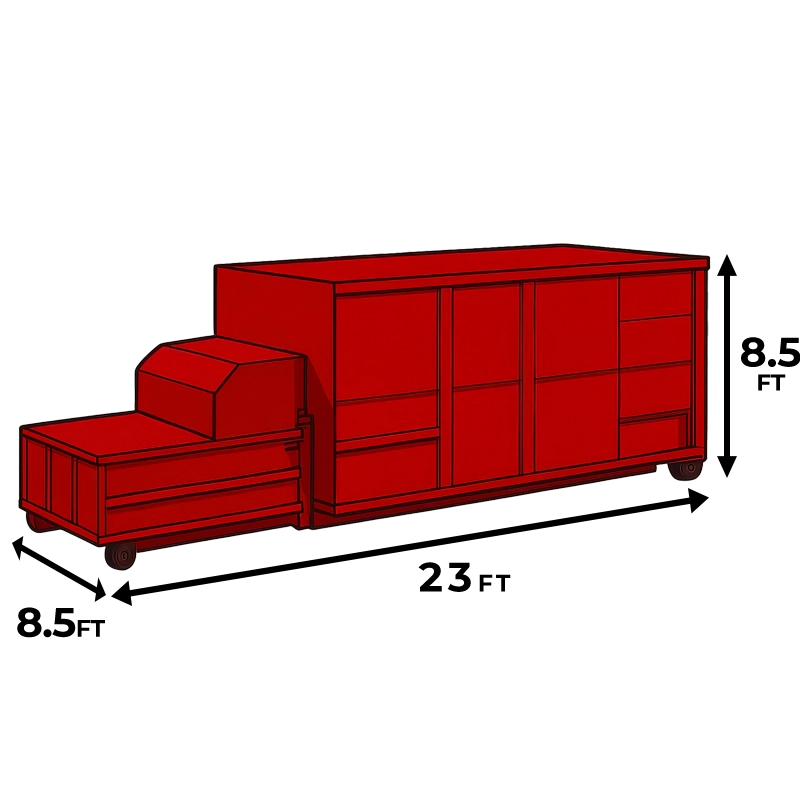
Homeowners size a container off the finished project. A three bedroom remodel sounds like a three bedroom amount of debris. Demolition does not work that way. A gut job produces most of its volume at the start, when drywall, plaster and lath, subfloor, tile, cabinetry, and old fixtures all come out before a single new material goes in. That is why a container that seemed large enough is full while the framing is still exposed.
Duration is the second problem. A whole-home remodel runs in phases with gaps between them: demolition, rough in, finish work, punch list. A container filled and hauled in week one leaves nothing on site for the cabinet crates, flooring offcuts, and packaging that arrive later.
Both problems have one fix. Size the container against the demolition volume rather than the room count, and plan for a swap if the job runs past it.
The housing stock matters here. Central San Antonio and the older Austin neighborhoods have plaster walls, wood lath, and layered flooring, all heavier per cubic yard than modern drywall. Hill Country properties around Boerne and New Braunfels tend to come with acreage and longer driveways, which changes placement more than it changes volume.
If the work is commercial construction rather than residential, that side is covered on its own page.